

Kornelijus
Affordable and reliable. Traveled to the US for a trip and used blikst. It was much more affordable than other companies and was very

 Trust score 4.5
Device Compatibility: Most modern smartphones are fully compatible with Blikst eSIMs. However, a few exceptions exist. Check our detailed compatibility list to confirm your device works flawlessly with our service..
Activation Policy: Enjoy automatic activation by simply scanning the QR code provided after purchase. Your eSIM will instantly activate upon your arrival at Peru, ensuring immediate connectivity.
Delivery Time: Receive a confirmation email with your eSIM details right after completing your purchase. Quick and seamless delivery ensures you’re ready to go in minutes.
Peru's classic traveller route — Lima, Cusco, Sacred Valley, Machu Picchu, optionally Arequipa and Lake Titicaca — runs across a mix of coastal, Andean, and jungle geography, and mobile signal varies wildly across it. A Blikst Peru eSIM runs on Telefónica's Movistar network, one of the country's three major carriers, with 3G/4G coverage across Lima, Cusco, Arequipa, Puno, Trujillo, and the Sacred Valley corridor. Amazon jungle routes and high-altitude trekking areas drop out quickly — worth knowing before you pick a plan.
Lima (Miraflores, Barranco, San Isidro, the historic centre), Cusco's San Blas and Plaza de Armas area, Arequipa's centre and San Lázaro, and the whole Pan-American Highway corridor down to the Chilean border all have dependable 4G. The Sacred Valley towns — Pisac, Ollantaytambo, Urubamba — are covered at town centres. The PeruRail and IncaRail routes to Aguas Calientes (Machu Picchu Pueblo) lose signal for long stretches of the train journey through the valley but have signal at Aguas Calientes itself. Lake Titicaca around Puno is covered; the floating Uros islands and Taquile/Amantani have intermittent signal. The Amazon around Puerto Maldonado has 4G in town; jungle lodges are largely offline.
You can buy a Claro, Movistar, or Entel SIM at Jorge Chávez airport for around PEN 10–30 ($3–$8) with a data pack, but registration takes time and your passport in hand. US carriers roaming in Peru typically charge $10–$12 per day — a week-long trip is more than $70 in roaming fees alone. A Blikst eSIM installs before you fly and avoids the counter queue in Lima arrivals.
Install the profile at home on Wi-Fi. Land at Jorge Chávez (LIM) in Lima, Alejandro Velasco Astete (CUZ) in Cusco, or Rodríguez Ballón (AQP) in Arequipa, switch airplane mode off, and Movistar registers. Lima airport is in Callao, 30–60 minutes from Miraflores depending on traffic — the Airport Express bus and Uber both work. Cusco airport is 10 minutes from the Plaza de Armas, and you'll want working data immediately for altitude check-ins and hotel coordination.
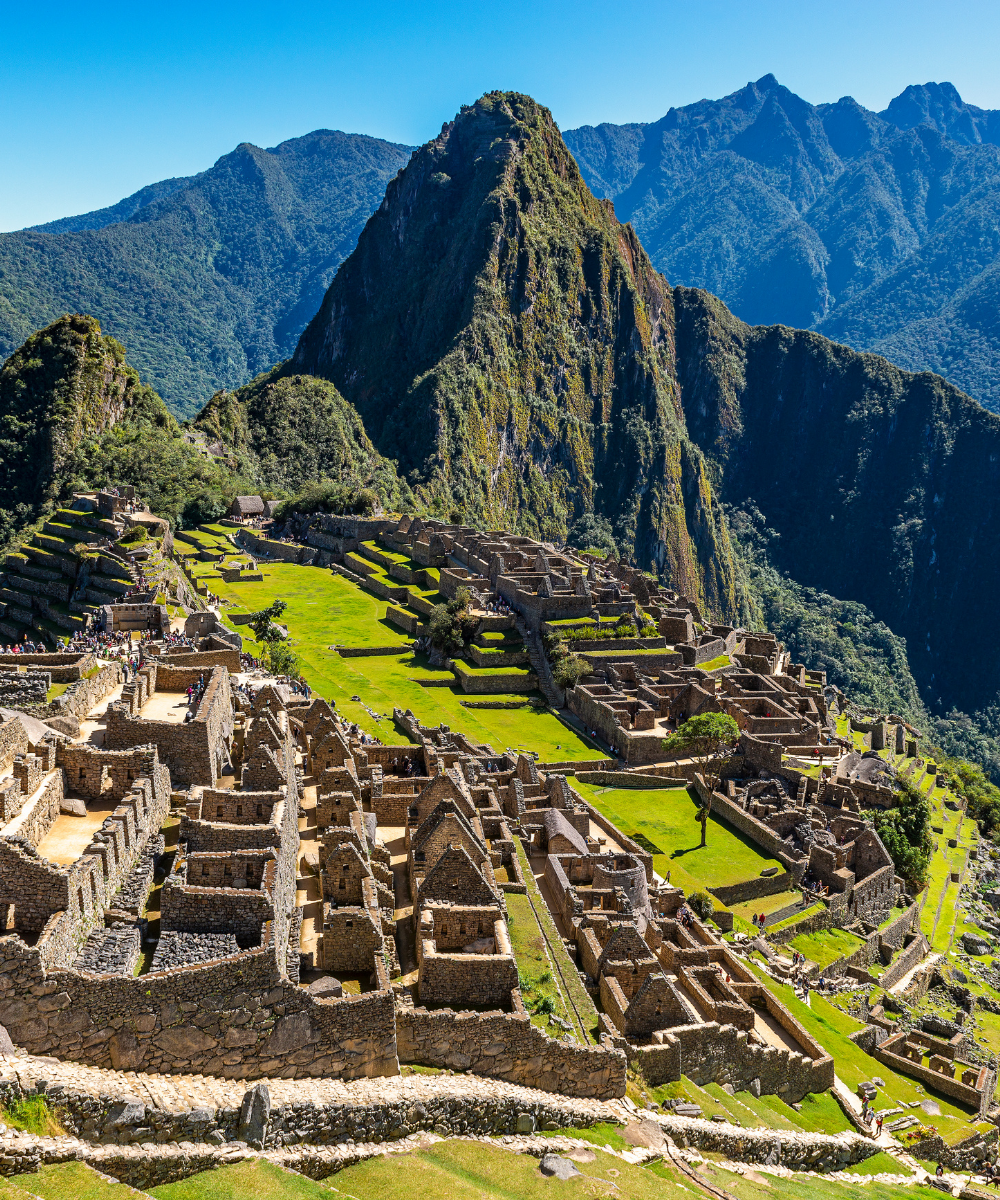
Cusco is at 3,400 m and first-day altitude sickness is real — having a working data line for coca tea delivery, hotel desk WhatsApp, and oximeter apps is genuinely useful. Machu Picchu itself has some signal at the ruins but it's patchy; Aguas Calientes town is covered. The Inca Trail 4-day trek is offline for days 2–3. Sacred Valley ruins (Pisac, Ollantaytambo) have signal at car parks and entrances but not always at the top of the ruin sites.
A 4-day Lima business trip — 2 GB. A one-week Lima + Cusco + Machu Picchu classic — 5 GB. Two-week Peru grand tour adding Arequipa, Colca, and Lake Titicaca — 10 GB. Three-week trip with Amazon jungle add-on (Puerto Maldonado or Iquitos) — 10–15 GB, but assume jungle days are offline.
Install before you fly, land at Jorge Chávez or Cusco, and skip the airport SIM queue entirely.


Couldn't load pickup availability


Confirm that your smartphone or device supports our Blikst eSIM functionality.
Learn More

Use the provided step-by-step guide to set up and activate your eSIM in few minutes. Then enjoy your trip.
Learn MoreAffordable and reliable. Traveled to the US for a trip and used blikst. It was much more affordable than other companies and was very
Smooth, simple, just works. Use it again.
Quick activation and stable connection. Super handy 🌟 Used it during my trip in Madeira.
Lovely support, got an esim for UK. Had no issues.
I used to have 3 mobile but the internet connection was not the best, that’s why I started to use Blikst and I find it very useful
The Blikst Peru eSIM runs on Telefonica's Movistar network, one of Peru's three major carriers. You get 3G and 4G speeds, which is plenty for maps, messaging, ride-hailing and train apps. Movistar is well established across the main tourist route, though signal naturally varies a lot once you head into the Amazon or up to high-altitude trekking areas.
Coverage is dependable 4G across Lima's neighbourhoods like Miraflores, Barranco and the historic centre, Cusco around San Blas and the Plaza de Armas, Arequipa's centre, and the Pan-American Highway corridor to the Chilean border. Sacred Valley towns such as Pisac, Ollantaytambo and Urubamba are covered at their centres. Be honest with yourself about weak spots: the PeruRail and IncaRail journeys to Aguas Calientes drop out for long stretches, the Uros and Taquile islands on Lake Titicaca are intermittent, and Amazon jungle lodges are largely offline.
Right after you buy, you'll get a confirmation email with your eSIM details and a QR code. Install the profile at home on Wi-Fi by scanning the code in your phone's settings. The eSIM activates automatically on arrival, so when you land at Jorge Chavez in Lima, Velasco Astete in Cusco or Rodriguez Ballon in Arequipa, just switch airplane mode off and Movistar registers. No counter queues, no paperwork.
Most modern smartphones work fully with Blikst eSIMs, though a few exceptions exist, so it's worth checking our detailed compatibility list first. Your phone also needs to be carrier-unlocked. On an iPhone, look under Settings then General then About for an EID number; on Android, check your network or SIM settings for an eSIM or download-SIM option. If you see those, you're good to go.
It depends on your route. A four-day Lima business trip is comfortable on around 2 GB. The classic one-week Lima, Cusco and Machu Picchu loop suits about 5 GB. A two-week grand tour adding Arequipa, Colca and Lake Titicaca is better on 10 GB. A three-week trip with an Amazon add-on around Puerto Maldonado or Iquitos wants 10 to 15 GB, though assume your jungle days are largely offline anyway.
Yes, tethering and hotspot are supported, so you can share your connection with a laptop, tablet or a travel companion's phone. It's handy in Lima or Cusco hotels with patchy Wi-Fi, or for keeping a second device online during the journey. Just remember that hotspot use draws from the same data allowance, so a video call shared across two devices will get through your plan faster.
This is a data plan, so it doesn't come with a local Peruvian phone number for traditional calls or SMS. In practice that's rarely a problem: you can call and message over the internet using apps like WhatsApp, FaceTime or Messenger, and in Peru WhatsApp is where hotels, tour operators and train confirmations all happen anyway. Because the eSIM is a separate digital line, your physical home SIM and number can stay in the phone for anything important.
Usually, yes. US carriers roaming in Peru typically charge around 10 to 12 dollars a day, so a week alone tops 70 dollars in fees. You can buy a Claro, Movistar or Entel SIM at Jorge Chavez for roughly 10 to 30 soles, about 3 to 8 dollars with a data pack, but registration takes time and your passport in hand. A Blikst eSIM installs before you fly and skips the airport queue in Lima arrivals entirely.