

Kornelijus
Affordable and reliable. Traveled to the US for a trip and used blikst. It was much more affordable than other companies and was very

 Trust score 4.5
Device Compatibility: Most modern smartphones are fully compatible with Blikst eSIMs. However, a few exceptions exist. Check our detailed compatibility list to confirm your device works flawlessly with our service..
Activation Policy: Enjoy automatic activation by simply scanning the QR code provided after purchase. Your eSIM will instantly activate upon your arrival at Bolivia, ensuring immediate connectivity.
Delivery Time: Receive a confirmation email with your eSIM details right after completing your purchase. Quick and seamless delivery ensures you’re ready to go in minutes.
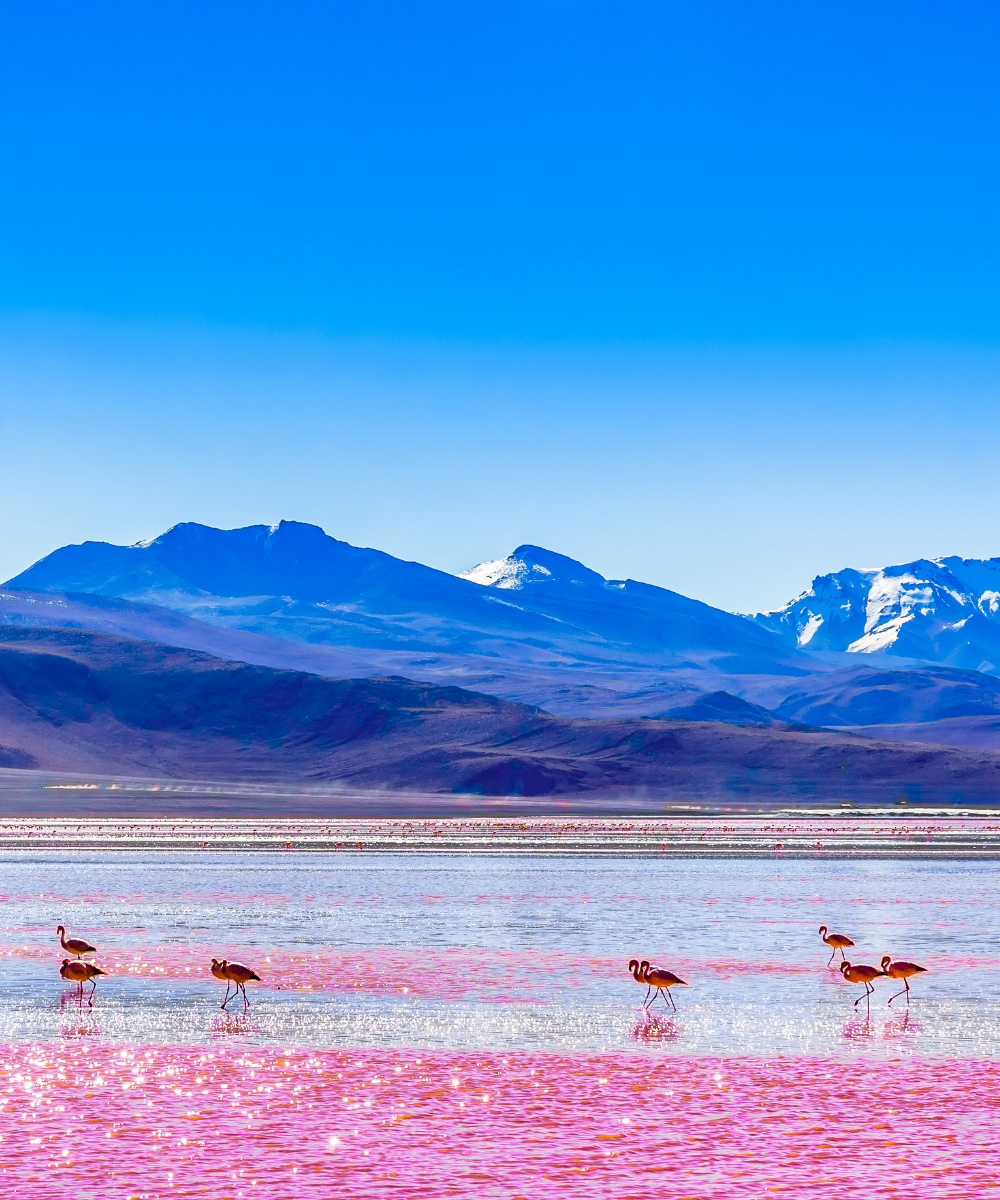
Bolivia is a country of extremes — La Paz sits at 3,640 metres, the Salar de Uyuni is the largest salt flat on earth, and the descent into the Amazon Basin drops you from altiplano cold to jungle heat in a few hours of driving. Staying online in between all of that used to mean hunting down an Entel kiosk and fumbling Spanish paperwork at Viru Viru airport. A Blikst Bolivia eSIM skips that: the profile runs on Telefonica (Movistar Bolivia) with 3G / 4G coverage across La Paz, Cochabamba, Santa Cruz, Sucre, Potosi, and along the main Ruta 4 and Ruta 7 corridors.
4G is consistent in the main cities and on the La Paz–Oruro–Cochabamba axis. Expect 3G fallback in Copacabana, around Lake Titicaca, across most of the Yungas road, and throughout the Uyuni salt flats themselves (signal pops up near the town of Uyuni and Colchani but drops on the flats proper). Madidi National Park, Rurrenabaque's river stretches, and the remote Tupiza–Uyuni overland route have long offline gaps — tour operators use satellite radios there, not mobile data.
Most US and European carriers bill Bolivia in the $10–$15 per day bracket for roaming, and some just block it outright. A Movistar Bolivia SIM at the airport is cheap but requires your passport, a Bolivian address for registration, and a willingness to wait. A Blikst 30-day plan sidesteps both — you land with data already working and you're not tied to an activation desk.
Install the eSIM over Wi-Fi before you fly; the QR scan will not work reliably on an airport network. When you land at La Paz (LPB) or Santa Cruz (VVI), switch off airplane mode and the line registers on Movistar automatically. Cochabamba (CBB) and Sucre (SRE) work the same way. If you're routing through Lima or Panama City first, the eSIM stays dormant until it sees a Bolivian tower.
La Paz and Potosi eat phone batteries faster than you'd expect — cold nights above 3,500 metres are rough on lithium cells. Bring a power bank. Your eSIM doesn't care about altitude, but a dead phone can't connect to anything. GPS pulls heavily when you're moving through the altiplano with no street grid to anchor to, so budget extra data for navigation-heavy days.
A 10-day La Paz + Uyuni loop runs comfortably on 3–5 GB if you're using offline maps and Wi-Fi at hostels. A two-week Death Road, Uyuni and Sucre circuit wants 10 GB — the overland driving hours chew through GPS data. Three-week itineraries adding Rurrenabaque and Samaipata are safer at 20 GB. Remote workers basing out of La Paz or Santa Cruz for a month should budget 50 GB for calls and video.
Install before you fly, land connected, and skip the airport SIM counter. Your first hour in Bolivia is better spent acclimatising than queuing.


Couldn't load pickup availability


Confirm that your smartphone or device supports our Blikst eSIM functionality.
Learn More

Use the provided step-by-step guide to set up and activate your eSIM in few minutes. Then enjoy your trip.
Learn MoreAffordable and reliable. Traveled to the US for a trip and used blikst. It was much more affordable than other companies and was very
Smooth, simple, just works. Use it again.
Quick activation and stable connection. Super handy 🌟 Used it during my trip in Madeira.
Lovely support, got an esim for UK. Had no issues.
I used to have 3 mobile but the internet connection was not the best, that’s why I started to use Blikst and I find it very useful
The Blikst Bolivia eSIM runs on Telefonica, the operator behind Movistar Bolivia, with 3G and 4G coverage. You get consistent 4G across the main cities and along the La Paz to Oruro to Cochabamba axis, with 3G fallback in the more remote and high-altitude stretches. It is a data plan, so it keeps you online for maps, messaging and banking apps wherever Movistar's signal reaches.
Coverage spans La Paz, Cochabamba, Santa Cruz, Sucre and Potosi, plus the main Ruta 4 and Ruta 7 corridors. Expect 3G fallback around Copacabana, Lake Titicaca, the Yungas road and the Uyuni salt flats — signal appears near Uyuni town and Colchani but drops on the flats themselves. Madidi National Park, Rurrenabaque's river stretches and the Tupiza to Uyuni overland route have long offline gaps where operators use satellite radios, not mobile data.
Right after purchase you receive a confirmation email with your eSIM details, then you scan the QR code provided to install it. Do this over Wi-Fi before you fly, as the scan will not work reliably on an airport network. Activation is automatic: when you land at La Paz, Santa Cruz, Cochabamba or Sucre, switch off airplane mode and the line registers on Movistar by itself. Routing through Lima or Panama City first keeps it dormant until it sees a Bolivian tower.
Most modern smartphones are fully compatible with Blikst eSIMs, though a few exceptions exist, so check our detailed compatibility list to confirm your device. Your phone also needs to be carrier-unlocked and eSIM-capable. On an iPhone you can check under Settings then General then About for an EID number; on Android look in your network or SIM settings. If the EID is there and the handset is unlocked, you are good to go.
It depends on your itinerary. A 10-day La Paz and Uyuni loop runs comfortably on 3 to 5 GB if you lean on offline maps and hostel Wi-Fi. A two-week Death Road, Uyuni and Sucre circuit wants around 10 GB, since the overland driving hours chew through GPS data. Three-week trips adding Rurrenabaque and Samaipata are safer at 20 GB. Remote workers basing in La Paz or Santa Cruz for a month should budget 50 GB.
Yes, tethering and hotspot use are supported, so you can share your connection with a laptop or a travelling companion's phone. Keep in mind that mobile data thins out quickly once you leave paved roads, and navigation through the altiplano pulls heavily on GPS, so a hotspot will drain your allowance and your battery faster on remote, driving-heavy days. Bring a power bank, because a dead phone cannot connect to anything regardless of signal.
This is a data plan, so it does not come with a local Bolivian phone number for traditional calls or texts. In practice that is fine here: tour guides in Uyuni, Rurrenabaque and Copacabana confirm pickups over WhatsApp, and you can call or message over the internet with apps like WhatsApp or FaceTime. Because the eSIM is a separate digital line, your physical home SIM and number can stay in the phone for anything you genuinely need them for.
Usually, yes. Most US and European carriers bill Bolivia in the 10 to 15 US dollars per day bracket for roaming, and some block it outright. A Movistar SIM at the airport is cheap but needs your passport, a Bolivian address for registration and a willingness to queue. A Blikst 30-day plan sidesteps both — you land with data already working and you are not tied to an activation desk, so your first hour is spent acclimatising rather than queuing.